
Topics
Economic and Social Development Initiatives
Alois Takawira Mangwende's initiatives and advocacy in economic and social development reflect his focus on creating equitable, sustainable progress for Zimbabwe. His work aimed at addressing systemic issues, empowering marginalized groups, and leveraging community participation to achieve developmental goals. Below are key aspects of his contributions:
1. Advocacy for Economic Ownership and Empowerment

Mangwende's Vision:
- He emphasized the need for Zimbabweans to take control of their economy, moving from being managers to owners of commerce and industry.
- He viewed economic independence as integral to national sovereignty and a key step toward sustainable development.
Impact:
- This approach encouraged the establishment of black-owned businesses and industries, particularly in the mining and manufacturing sectors.
- By focusing on local ownership, Mangwende sought to redistribute wealth and create opportunities for economic self-determination.
2. Support for Small-Scale Enterprises

Mangwende's Initiatives:
- He advocated for government support of small-scale businesses, including providing business extension services, funding, and consultancy.
- He organized workshops to train women and youth in business management and entrepreneurship.
Impact:
- These efforts helped bridge gaps in resources and knowledge, empowering individuals to pursue self-employment and contribute to economic growth.
- His focus on small-scale enterprises aligned with global best practices, which highlight the importance of micro-enterprises in job creation and poverty alleviation.
3. Promotion of Infrastructure Development

Mangwende's Advocacy:
- He supported electrifying schools, improving hospital facilities, and building roads to ensure basic infrastructure was available in rural and underdeveloped areas.
- He championed the reinvestment of royalties from natural resource exploitation into local development projects.
Impact:
- Improved infrastructure facilitated access to education, healthcare, and markets, enhancing overall quality of life.
- His emphasis on local reinvestment fostered a sense of community ownership and ensured development benefits were distributed equitably.
4. Employment and Skills Training

Mangwende's Contributions:
- Recognizing high unemployment rates, he prioritized training programs for school-leavers and women to equip them with practical skills.
- He advocated for structural adjustments in education and employment sectors to align with the demands of a modern economy.
Impact:
- These initiatives helped address youth unemployment and empowered marginalized groups, reducing reliance on government support.
- His emphasis on skills training also encouraged innovation and entrepreneurship, key drivers of economic resilience.
5. Gender and Social Inclusion
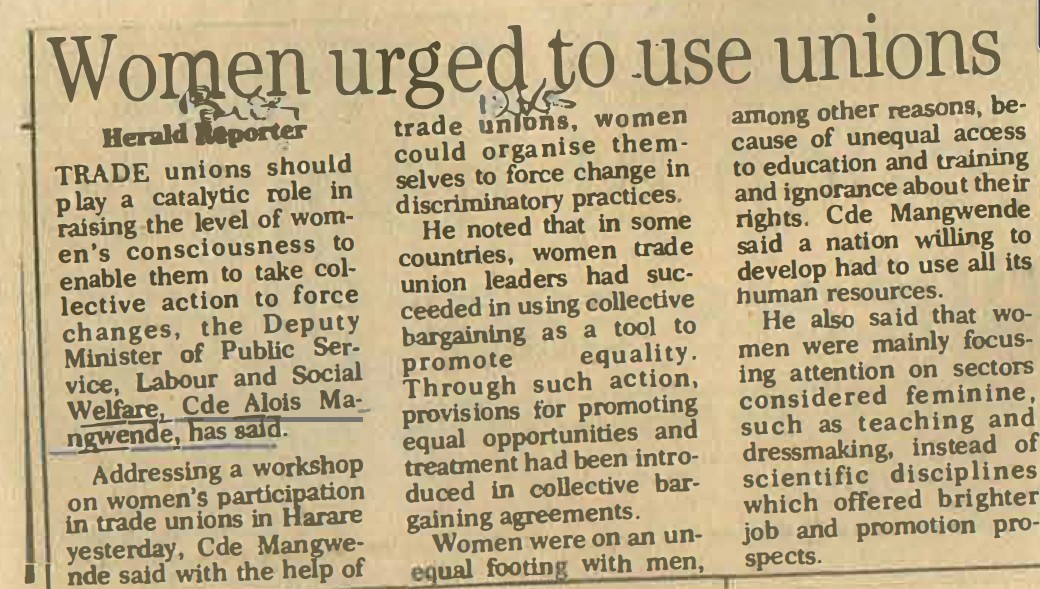
Mangwende's Perspective:
- He championed the inclusion of women and underrepresented groups in economic activities.
- He argued for equitable access to resources, education, and decision-making opportunities to ensure no group was left behind.
Impact:
- His advocacy contributed to breaking down systemic barriers, enabling women to participate more actively in economic and social spheres.
- By fostering inclusivity, Mangwende helped promote social cohesion and a more balanced approach to development.
6. Community-Centric Development

Mangwende's Approach:
- He emphasized the importance of community involvement in planning and executing development projects.
- He encouraged local leaders and members to work collaboratively with government officials to identify and address community-specific needs.
Impact:
- This participatory approach ensured that development initiatives were context-sensitive and met the actual needs of the communities.
- By involving locals, he strengthened accountability and sustainability in project implementation.
7. Focus on Poverty Reduction
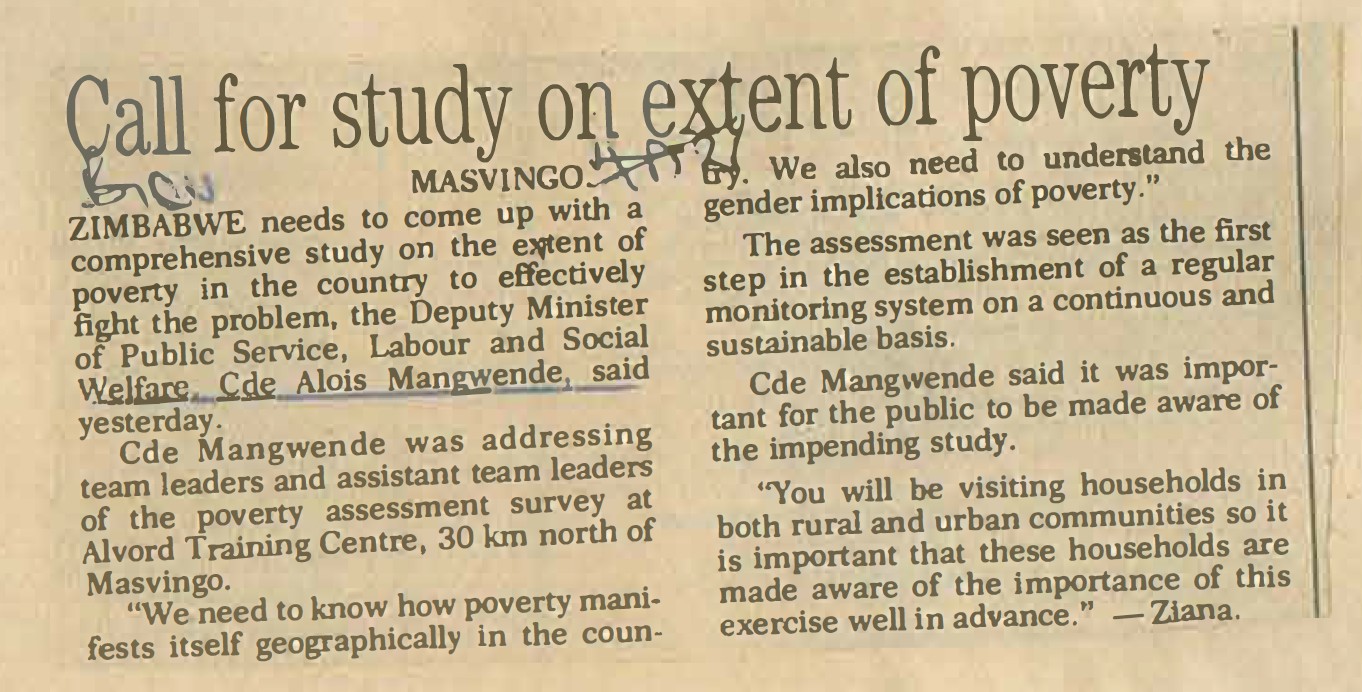
Mangwende's Strategy:
- He advocated for comprehensive poverty assessments to understand the geographic and demographic manifestations of poverty.
- His emphasis on targeted interventions reflected his commitment to addressing root causes rather than symptoms of poverty.
Impact:
- These measures improved policy formulation and resource allocation, ensuring that the most vulnerable populations were prioritized.
- His poverty alleviation strategies contributed to a broader framework of social equity and justice.