
Topics
Contributions to Literacy and Education
Alois Mangwende's contributions to literacy and education highlight his belief in the transformative power of education as a driver of personal empowerment and national development. Below are key insights into his efforts and perspectives in this area:
1. Promotion of Literacy as a Developmental Priority
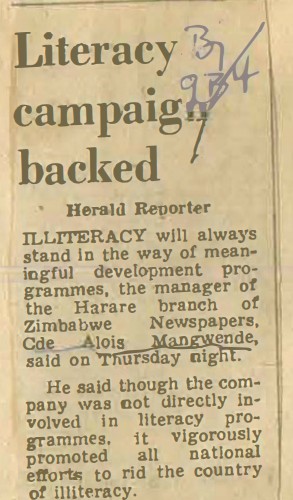
Mangwende's Efforts:
- He recognized illiteracy as a significant barrier to meaningful development and actively supported initiatives aimed at eradicating it.
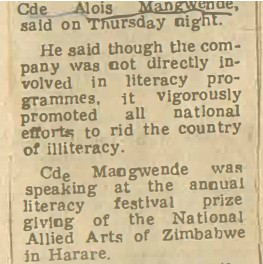
- As a leader, Mangwende emphasized collaboration with various organizations to promote literacy campaigns, contributing resources and encouraging participation across sectors.
Impact:
- By framing literacy as an essential component of national progress, he underscored its role in enabling citizens to engage with government policies, participate in democratic processes, and improve their economic prospects.
- His advocacy helped to elevate literacy as a critical issue in Zimbabwe’s broader developmental agenda.
2. Support for Educational Institutions
Mangwende's Involvement:
- He emphasized equipping schools with essential resources, such as electricity and educational materials, to enhance their functionality.
- He advocated for modernizing education infrastructure, including hospitals and schools, to create better learning environments.
Impact:
- These efforts aimed to address systemic inequalities in education, particularly in rural areas where infrastructure deficits often limited access to quality education.
- By championing improvements in basic amenities, he sought to make education more accessible and effective.
3. Focus on Skills Development and Employment
Mangwende's Efforts:
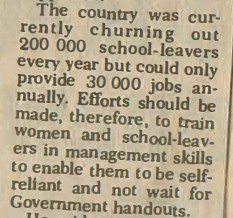
- He supported seminars and workshops that encouraged school-leavers and unemployed individuals to consider self-employment as a viable career path.
- He advocated for extending business training and management skills to women and young people, recognizing their potential as drivers of economic growth.
Impact:
- These initiatives helped to equip individuals with practical skills necessary for entrepreneurship and self-reliance, reducing dependency on formal employment.
- His focus on empowerment through education aligned with broader goals of fostering innovation and economic self-sufficiency.
4. Gender Equality in Education

Mangwende's Efforts:
- He highlighted the unequal access to education and training faced by women and called for measures to address these disparities.
- He advocated for women to diversify their career choices beyond traditionally "feminine" roles, encouraging them to pursue fields like science and technology.
Impact:
- This advocacy supported broader efforts to dismantle gender biases in education and the workplace, fostering a more inclusive society.
- By encouraging women to enter scientific disciplines, Mangwende contributed to addressing gender imbalances in critical sectors of the economy.
5. Literacy and Community Engagement

Mangwende's Viewpoint:
- He believed literacy campaigns required collective efforts from individuals, organizations, and the government.
- His emphasis on mass participation highlighted his view that literacy is both a social responsibility and a communal achievement.
Impact:
- His focus on community involvement fostered a sense of shared purpose, encouraging diverse groups to contribute to the fight against illiteracy.
- By involving multiple stakeholders, he helped create sustainable models for literacy promotion that extended beyond government-led initiatives.