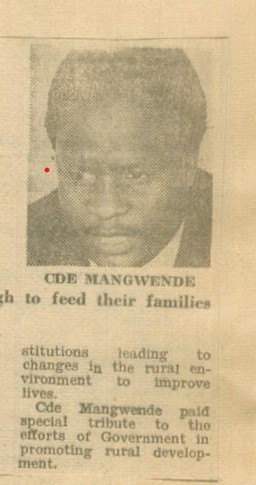
Alois Takawira Mangwende

Media & Development

Alois Mangwende played a key role in promoting the use of media for social change, particularly in rural areas. He understood the power of communication in mobilizing communities for economic and social development. Below is a deeper analysis of his views on the role of media in national development:

1. Media as an Agent of Development

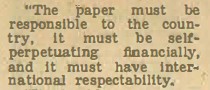
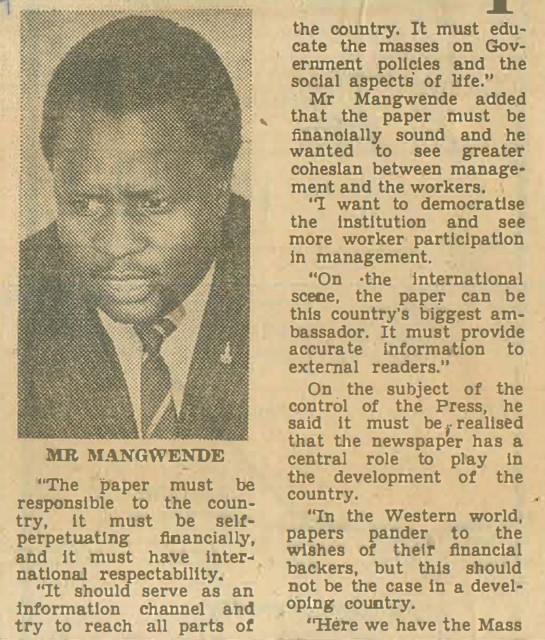
The paper must be responsible to the country

Mangwende's Viewpoint:

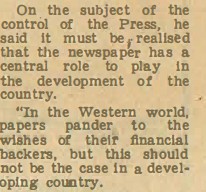
He positions the media as a fundamental pillar in the dissemination of government policies, promoting societal education, and ensuring national cohesion.

Theoretical Context:

This aligns with Development Communication Theory, where media is viewed as a tool to promote social and economic progress, particularly in developing countries.

Critical Reflection:

While Mangwende’s emphasis on the media's role in nation-building is valid, there is a risk of media being co-opted into propagandizing government ideologies.

2. Media's Independence and Financial Viability

Financial Viability of Media

Mangwende's Viewpoint:

He stresses the importance of financial sustainability for national newspapers to avoid external dependencies.

Theoretical Context:

This reflects the principles of Media Autonomy, suggesting that financial independence is essential for editorial independence.

Critical Reflection:

Mangwende's view emphasizes fostering national identity, but his concern about "anti-government stances" may risk conflating legitimate critique with antagonism.

3. Democratization of Media Institutions

Democratizing the Institution

Mangwende's Viewpoint:

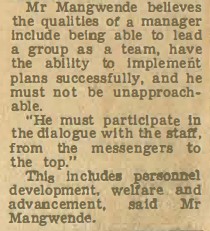
He advocates for democratization within media organizations, promoting worker participation.

Theoretical Context:

His views align with participatory communication models, which argue for inclusive media production.

Critical Reflection:

Achieving democratization can be challenging in hierarchical or state-controlled media structures.

4. Media as an International Ambassador

Media as an International Ambassador

Mangwende's Viewpoint:

He sees media as a vehicle for enhancing Zimbabwe's international reputation.

Theoretical Context:

This reflects Nation Branding and Soft Power Theory, illustrating how media representation influences global perceptions.

Critical Reflection:

The challenge lies in balancing national branding with journalistic integrity.

5. Media's Role in Avoiding Partisanship

Media's Role in Avoiding Partisanship

Mangwende's Viewpoint:

He critiques Western media for catering to financial backers and emphasizes national interests.

Theoretical Context:

This touches on the Political Economy of Media, examining how ownership influences content.

Critical Reflection:

The challenge lies in maintaining a diverse media ecosystem where critical perspectives can thrive.

Conclusion

Alois Mangwende's views on media and national development provide a clear framework for the role of media in fostering nation-building and societal progress. However, his perspective also invites caution:

Mangwende’s insights remain relevant today, particularly for developing nations navigating media, governance, and development.